

French Drain, Dry Creek Bed, or Regrading? Choosing the Right Drainage Fix in Ruston
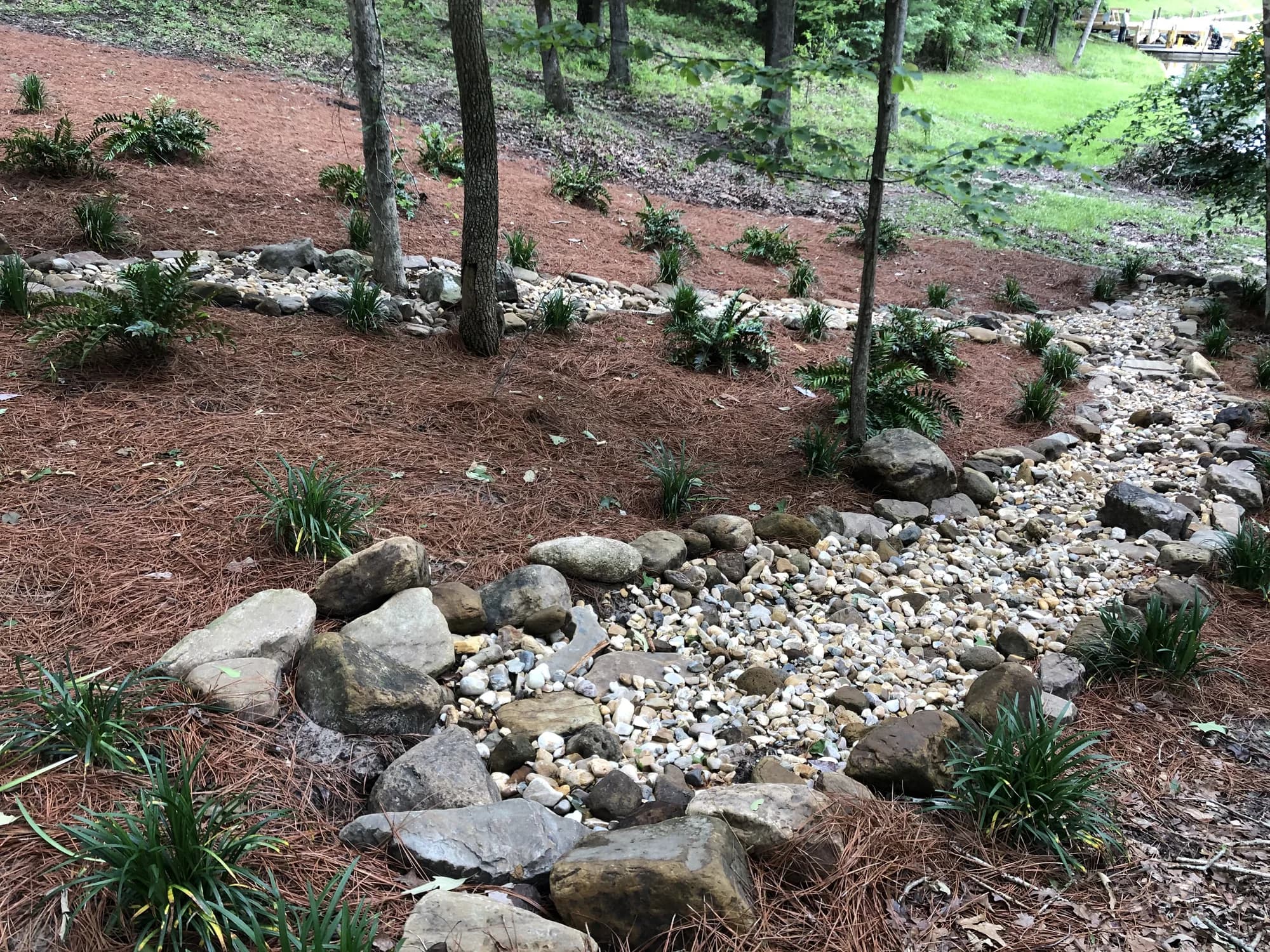
Quick answer: use regrading when water flows toward your house because the ground slopes the wrong way; a French drain when water sits in a low area or the soil stays saturated; and a dry creek bed when you need to carry a lot of surface runoff across the yard and want it to look like part of the landscape. Many properties in Ruston's rolling terrain need a combination.
Ruston sits on hills, and hills move water — fast. Add our clay soils, which drain slowly, and heavy winter and spring storms, and you get washed-out beds, standing water, and soil erosion. The good news: nearly every drainage problem can be fixed. The key is matching the fix to the cause.
Start with the cause
Before choosing a solution, we watch where the water comes from and where it wants to go:
- Is water running toward the house? That's a grading problem.
- Is water sitting in one spot for a day or more? That's a low spot or poorly draining soil.
- Is a large volume of water crossing the yard from a neighbor, a street, or downspouts? That's a runoff channel problem.
- Are gutters dumping right at the foundation? Downspout extensions may be most of the answer.
Regrading: fix the slope
Regrading reshapes the soil so the ground falls away from your foundation and toward a safe outlet. It's the most fundamental fix — if the slope is wrong, other systems are fighting gravity.
Best for: new construction lots, yards where soil has settled against the house, patios or beds that trap water. Watch for: grading needs to happen before sod or plantings go in, which is why we often pair it with dirt work and new sod.
French drains: move water underground
A French drain is a gravel-filled trench with a perforated pipe that collects water and carries it underground to an outlet. It's invisible when finished — the lawn or bed goes right back over it.
Best for: soggy low spots, saturated ground along a foundation or retaining wall, and yards where you don't want a visible channel. Watch for: a French drain needs somewhere to go — a street, a ditch, a lower part of the property, or a pop-up emitter. Proper fall on the pipe and fabric to keep silt out are what make it last.
Dry creek beds: move water above ground — beautifully
A dry creek bed is a shallow, rock-lined channel shaped like a natural stream. In a storm it carries runoff; the rest of the time it's a landscape feature with river rock, boulders, and plantings along the banks.
Best for: large volumes of surface runoff, sloped yards, and spots where water already cuts its own path. Watch for: the channel must be sized and lined correctly — fabric under the rock and larger stones at curves keep it from washing out. You can see examples in our erosion control and drainage work.
Often, the answer is a combination
On many Ruston properties we'll regrade near the house, run downspouts into a buried line, and send it all to a dry creek bed that carries water to a safe outlet. Designed together, the system handles big storms and looks like it belongs in the landscape.
Don't wait for the next storm
Drainage problems get worse over time: soil erodes, beds wash out, and water finds its way to foundations and slabs. Late fall — before winter rains — is the ideal time to fix them. We also wrote about ground drainage in West Monroe if you want more background.
Request a free drainage consultation. We'll walk your property, show you where the water is going, and recommend the simplest fix that will actually work.
Frequently asked questions
How do I know if my yard needs a French drain?+
Water that stands in the same low areas for a day or more after rain, soggy ground that never seems to dry out, or water collecting against your foundation are the most common signs.
Is a dry creek bed just decorative?+
A well-built dry creek bed is a real drainage channel. It carries surface runoff during storms and looks like a natural landscape feature the rest of the time.
When is the best time to fix drainage problems?+
Before the heavy rains of winter and spring. Late fall is ideal — you can see exactly where water goes during storms and fix it before it damages beds, lawns, or foundations.
- #drainage
- #french drain
- #dry creek bed
- #grading
- #ruston la
Written by
Clint SantOwner of Creative Landscapes and a licensed landscape horticulturist (LSU B.S., Auburn M.S. Horticulture) with 20+ years designing and building landscapes across Northeast Louisiana.
Keep reading
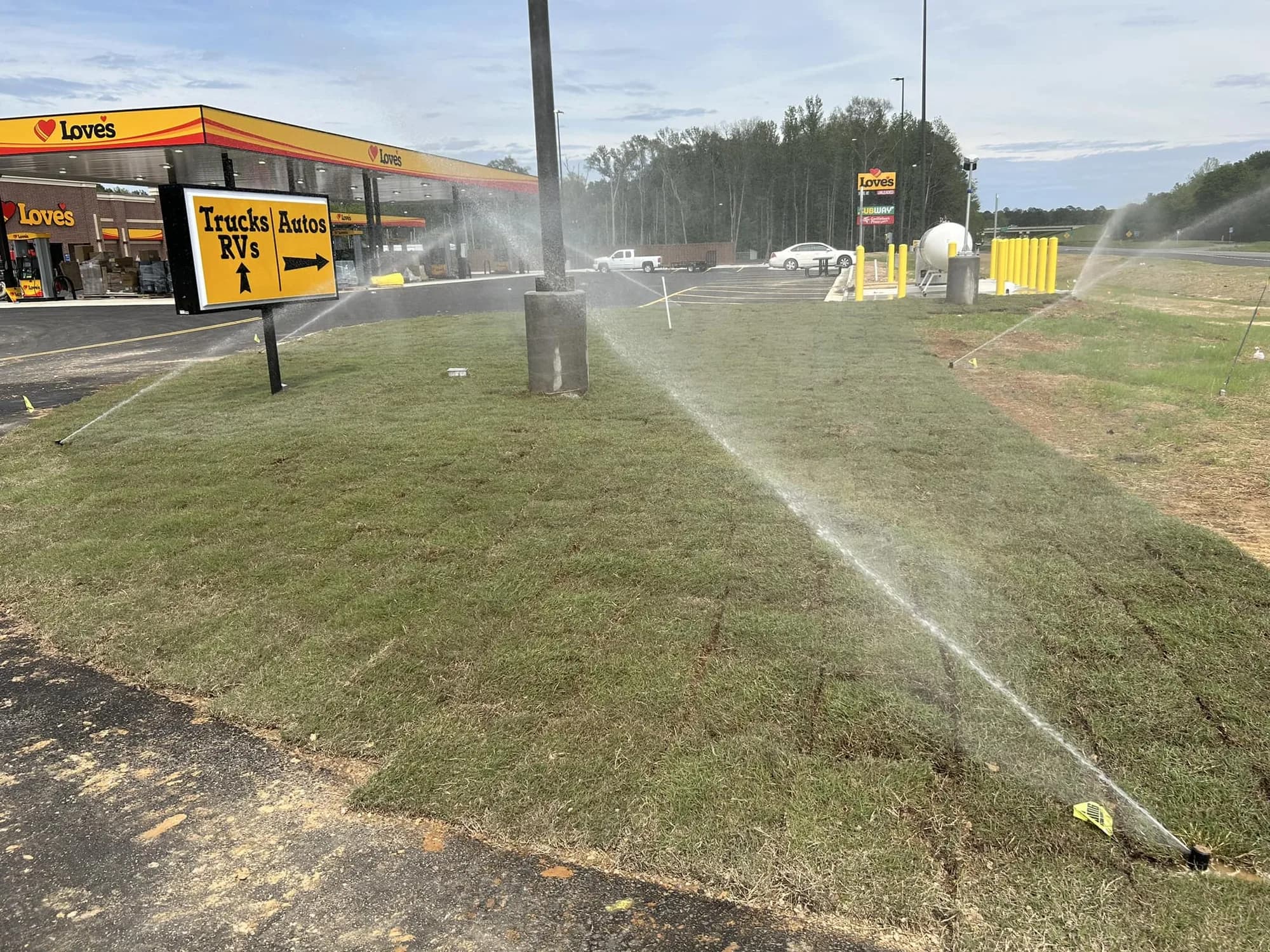
Do You Need to Winterize Your Sprinkler System in Northeast Louisiana?
Our winters are mild — until they aren't. A few simple steps now can save you from a cracked backflow preventer and a flooded yard after the next hard freeze.
Read article
Ruston LA Landscaper Guide to Fall Fertilization and Soil Care
🍂 Ruston LA Landscaper Guide to Fall Fertilization and Soil Care. Learn expert fertilization tips, soil care practices, and fall lawn maintenance strategies for a thriving spring lawn.
Read articleLandscape Lighting Ideas for Longer Fall Nights in West Monroe
Once the time changes, most of your time at home is after dark. These landscape lighting ideas add safety, curb appeal, and ambiance without the glare.
Read article
Ready to see what your yard could be?
Schedule a free consultation. Clint will walk your property and give you honest recommendations — no pressure.