
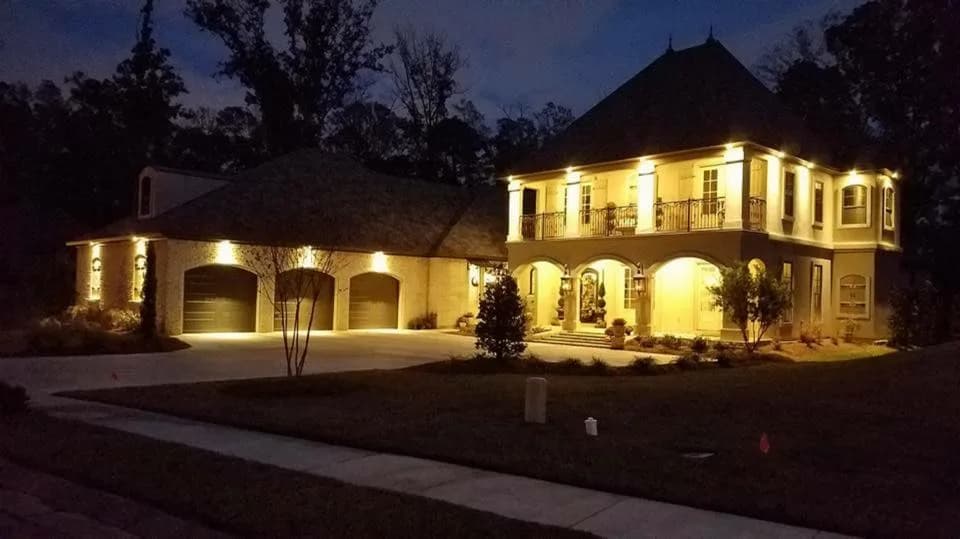
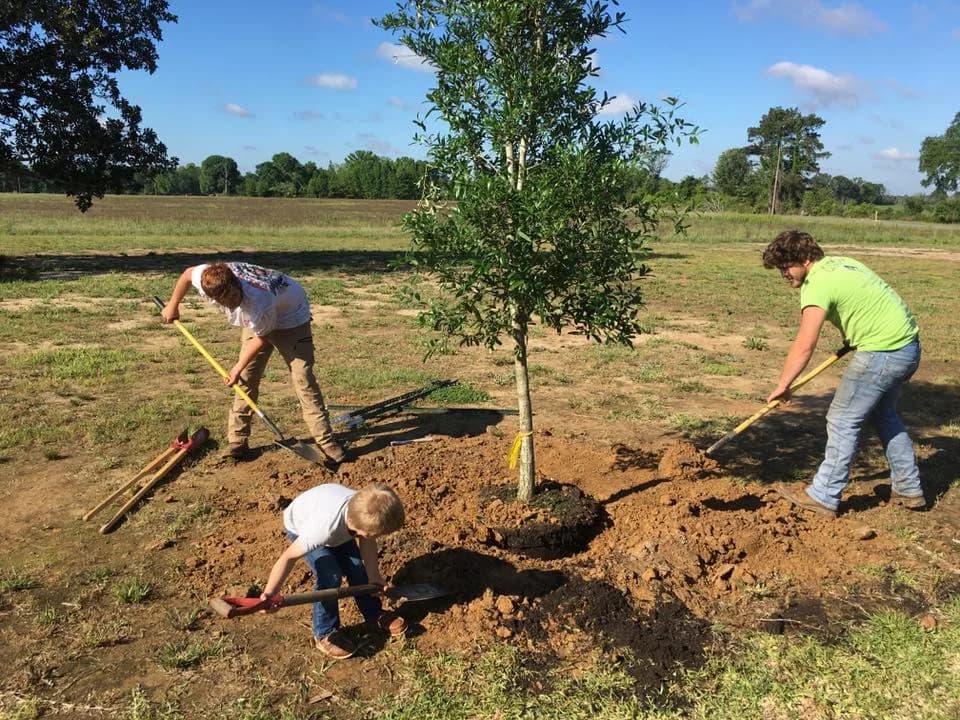
Quick answer: in Northeast Louisiana, the best time to plant a tree is from late October through February. The air is cool, so the tree isn't fighting heat and drought, but our soil rarely freezes deep — which means roots keep growing all winter. By the time a Monroe summer hits, a fall-planted tree has months of root growth that a spring-planted tree simply doesn't have.
Most people think about planting in spring because that's when garden centers fill up and everything looks green. But trees don't care about what looks good on the lot. They care about roots, and roots grow best when the top of the tree is resting.
Why fall planting works so well here
When you plant a tree in April or May, it has to do two jobs at once: push out new leaves and grow new roots — right as temperatures climb into the 90s. A tree planted in November only has one job: roots. The LSU AgCenter recommends fall through winter as the ideal window for exactly this reason.
A few things make our area especially good for it:
- Mild winters. Monroe's average first freeze is mid-November, and hard freezes are short. Roots keep working in soil that stays above about 40°F.
- Reliable winter rain. Fall and winter rains do a lot of the watering for you.
- Less stress, less loss. Trees planted in the cool season have noticeably better survival through their first summer.
Good trees for Northeast Louisiana yards
The right tree depends on your space, sun, and drainage. A few we recommend often:
- Swamp red maple — fast-growing shade with great fall color, and it tolerates wet spots. We wrote a full profile of the swamp red maple.
- Southern magnolia and 'Little Gem' magnolia — evergreen, glossy, and tough. 'Little Gem' fits smaller yards.
- Live oak and Shumard oak — long-lived shade trees for bigger lots. Give them room.
- Bald cypress — handles both wet and dry sites and has soft, feathery texture.
- Crape myrtle — summer color for tight spaces, as long as you pick a variety that fits its space at maturity.
- Evergreens for privacy — see our guide to the best evergreen trees for Northeast Louisiana.
Always check the mature size before you buy. A tree that's cute in a 15-gallon pot can outgrow a front bed or crowd a foundation in ten years.
How to plant a tree the right way
Most tree failures we see aren't from bad trees — they're from planting mistakes. Here's the method we use:
- Dig wide, not deep. Make the hole two to three times as wide as the root ball but no deeper than it. The top of the root ball should sit level with — or an inch above — the surrounding soil. Planting too deep is the number one killer of new trees.
- Find the root flare. Scrape away extra soil on top of the root ball until you can see where the trunk widens into roots. That flare should be visible after planting.
- Fix circling roots. Container trees often have roots wrapped around the pot. Tease them out or cut them so they grow outward instead of strangling the tree later.
- Backfill with native soil. In our clay soils, filling the hole with rich potting mix creates a "bathtub" that holds water around the roots. If your soil is poor, improve the whole bed, not just the hole.
- Water deeply to settle the soil. This removes air pockets. Don't stomp the soil down hard.
- Mulch — but keep it off the trunk. Two to three inches of pine straw or bark in a wide ring, pulled back a few inches from the trunk. No "mulch volcanoes."
- Stake only if needed, and remove stakes within one growing season.
Skip the fertilizer at planting time. Nursery trees usually have enough nutrients, and a young root system can be burned by fertilizer before it's established.
Aftercare through the first year
For the first winter, water whenever you go about a week without a good rain. In spring and summer, a new tree will need regular deep watering — often twice a week in hot, dry stretches. A slow soak from a hose trickle or a drip ring beats a quick spray every time. If you have an irrigation system, a dedicated drip zone for new trees is one of the best investments you can make.
Let us help you plant it right
Whether you need one shade tree or a full landscape design and installation, we'll help you choose trees that fit your yard, source quality stock, and plant them correctly the first time. Request a free consultation and we'll walk your property with you.
Frequently asked questions
When is the best time to plant trees in Northeast Louisiana?+
Late October through February. Cooler air reduces stress on the tree while the soil stays warm enough for roots to grow all winter, so the tree is established before summer heat arrives.
Should I add compost or potting soil to the planting hole?+
Not to the hole alone. In clay soil an amended hole acts like a bowl and holds water around the roots. Backfill with the native soil, or improve the whole bed area if you want to amend.
How often should I water a newly planted tree in winter?+
Water deeply at planting, then whenever you go about a week without meaningful rain. Check the root ball with your finger — it should be moist, not soggy.
- #tree planting
- #fall planting
- #monroe la
- #native trees
Written by
Clint SantOwner of Creative Landscapes and a licensed landscape horticulturist (LSU B.S., Auburn M.S. Horticulture) with 20+ years designing and building landscapes across Northeast Louisiana.
Keep reading
15 Smart Tips for Helping Your Plants Survive the Hot Parts of Summer
Discover expert tips for helping your plants survive intense Louisiana heat. Learn watering, mulching, pruning, and maintenance strategies from Creative Landscapes, specialists in Landscaping in Monroe LA and Landscaping in Ruston, LA.
Read article
Summer Gardening Tips for Northeast Louisiana
A vibrant summer garden in North Louisiana filled with heat-tolerant vegetables like okra and peppers, surrounded by rich soil and mulch, thriving despite intense sun and humidity.
Read article
When to Plant New Shrubs in Monroe, LA: Expert Tips from Top Landscapers in Monroe
Discover the best time to plant new shrubs in Monroe, LA. Learn expert insights from top landscapers in Monroe on timing, soil preparation, and shrub care for a thriving garden.
Read article
Ready to see what your yard could be?
Schedule a free consultation. Clint will walk your property and give you honest recommendations — no pressure.